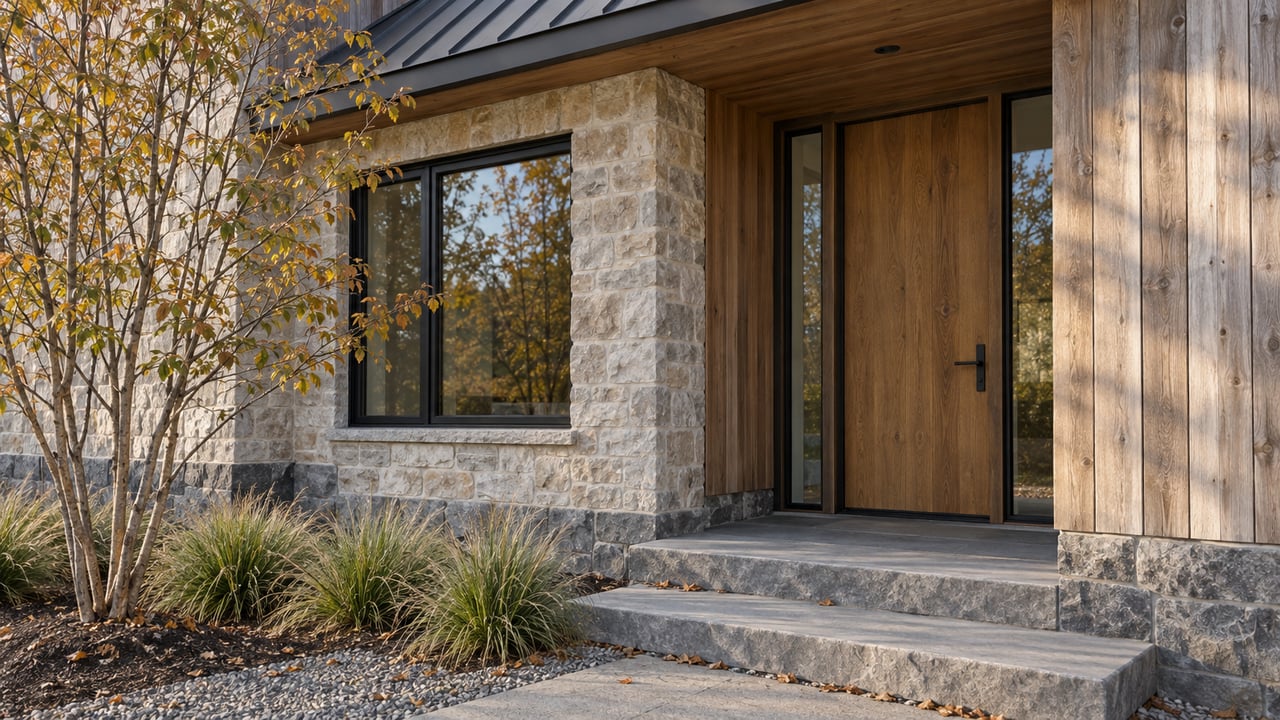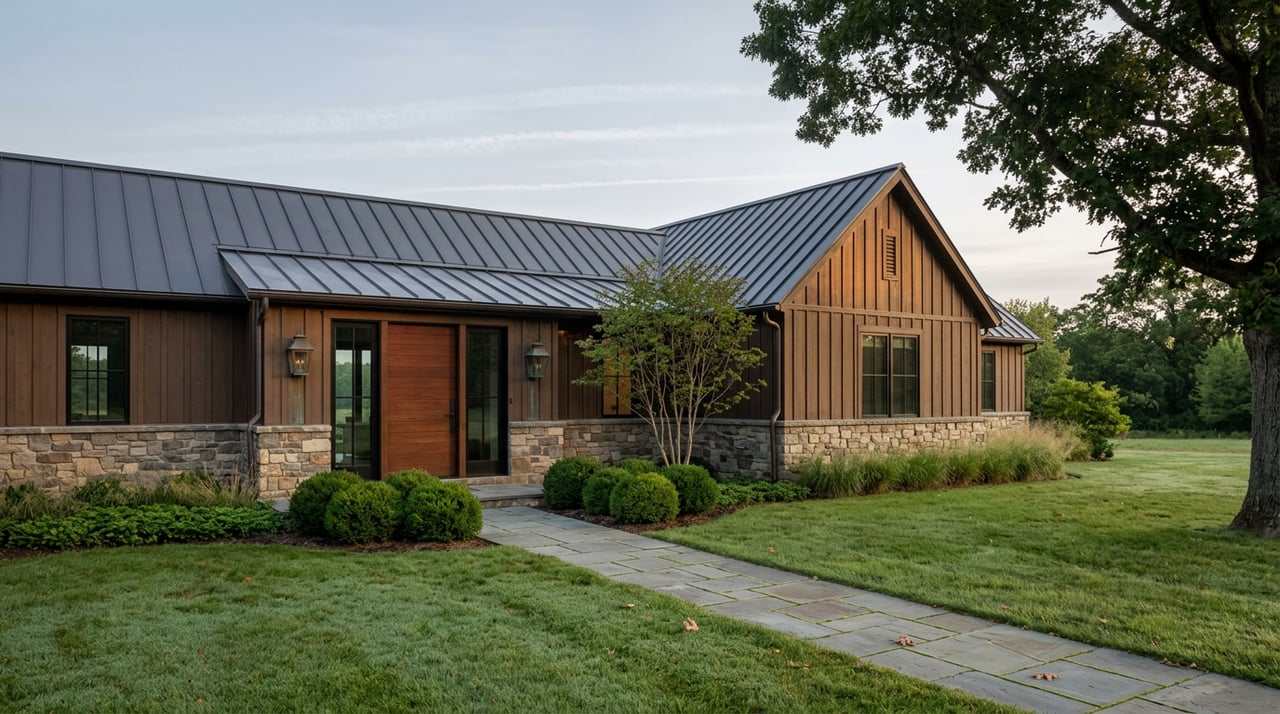
The listing photos always tell the same story: green lawn rolling to the water, mature oaks, a dock waiting for a boat. What they never show is what's underground, and on a lot in the Town of Linn, that's often the detail that decides whether the home you're touring can keep functioning the way it has for the past forty years.
Almost every property on Linn's stretch of Geneva Lake shoreline runs on a private well and a private septic system. There's no municipal sewer hookup waiting to solve the problem when a system finally wears out. That means two numbers set by Walworth County, one governing where a house can sit and one governing where a septic field can sit, end up doing more to determine a lot's long-term usability than the acreage or frontage ever will.
The Two Numbers Buried in the County Code
Walworth County's shoreland zoning ordinance sets a standard setback of roughly 75 feet between a principal structure and the ordinary high-water mark of a navigable lake, with setback averaging sometimes available depending on neighboring structures. That's the number most buyers hear about, usually from a builder or an appraiser talking about where a house or an addition can go.
The number almost nobody mentions is the second one. The county's own shoreland zoning guide requires a septic absorption system to sit at least five feet from the closest side lot line, ten feet from the house, and fifty feet from the closest well or from the lake itself. That's not a suggestion. It's the placement rule for any new or replacement drain field.
| Feature | Required distance | Measured from |
|---|---|---|
| Principal structure | About 75 feet (averaging may apply) | Ordinary high-water mark |
| Septic absorption field | 50 feet | Nearest well or the lake |
| Septic absorption field | 10 feet | House |
| Septic absorption field | 5 feet | Side lot line |
On paper, these rules coexist fine. On a narrow, decades-old platted lot, they compete for the same forty or fifty feet of usable ground between the house and the shoreline. A system that was installed under looser 1970s standards may already be sitting closer to the lake or the well than a replacement would be allowed to sit today. If that system fails, the buildable envelope for a new one might be smaller than the failed system's own footprint.
Why Linn Feels This More Than Most of the Lake
Some communities around Geneva Lake have absorbed part of this pressure with municipal infrastructure. The City of Lake Geneva, the Village of Fontana, and the Village of Williams Bay have each adopted their own zoning authority, including extraterritorial zoning that pulls some surrounding land under municipal rather than county control. The Town of Linn has no such overlay. It sits under the county's shoreland zoning code directly, and outside a handful of parcels, homes are on well and septic with no sewer main to fall back on.
That makes Linn one of the few places on the lake where the full weight of both setback rules applies without a municipal exception softening the math. It's also home to some of the oldest platted lakefront lots on Geneva Lake, parcels that were surveyed and built out long before either the 75-foot shoreland setback or the 50-foot septic rule existed. The house came first. The rules came later. Now they define what a buyer is actually allowed to do if that system needs to move.
Planning for Older Septic Systems
Many of the systems on Linn's oldest lakefront lots predate the current 50-foot placement rule entirely, which means a licensed inspector evaluating one today isn't just checking whether it works. They're checking whether a compliant replacement is even possible on that same footprint.
The numbers involved aren't small. A routine maintenance inspection, required every three years under Wisconsin Statutes § 145.20(5), typically runs $200 to $400, while a more detailed point-of-sale inspection built for a real estate transaction usually runs $300 to $600. Pumping a standard tank falls somewhere between $300 and $550. Those are manageable numbers on their own. A full system replacement, especially one constrained by a tight setback envelope, is a different order of expense, and it's one buyers should be pricing into their offer rather than discovering after closing.
What Actually Happens During the Well and Septic Review
If a well and pressure system inspection is part of the transaction, it must be performed by a licensed well driller or licensed pump installer, and the Wisconsin REALTORS Association says that inspection automatically comes with water testing for coliform bacteria, nitrate, and arsenic. A buyer can't simply have a home inspector glance at the wellhead and call it done.
If that testing turns up bacteriological contamination, the process that's traditionally followed under the Wisconsin REALTORS Association's water-testing addendum allows the seller to chlorinate the well and retest, typically up to two times, with the closing timeline extended to accommodate it. Buyers and sellers should confirm the exact terms of whatever addendum is in use at the time of contract, since specifics can be negotiated, but the basic sequence, test, treat, retest, is the standard path when a first result comes back unsafe.
Septic works on a different clock. State law requires every private system to be inspected or pumped at least once every three years and reported to the county, regardless of whether the home is being sold. Walworth County keeps an online reporting and maintenance history database tied to each parcel, which means a buyer's agent can pull a property's compliance history before ever scheduling a showing. A gap in that history, or a system that hasn't been reported on in longer than three years, is worth a question before it's worth an offer.
Before You Write an Offer on a Linn Lakefront Lot
- Pull the septic maintenance history from the county's online database for the specific parcel, not just the neighborhood.
- Ask when the current system was designed, and against which well location and shoreline point, since older permits may predate the 50-foot rule.
- If the lot looks narrow relative to the house and shoreline, ask a licensed POWTS inspector whether a compliant replacement location actually exists before assuming one does.
- Decide up front whether a well inspection will be part of your offer, since it triggers mandatory water testing and adds a licensed-provider requirement to your timeline.
- Treat any system flagged as aging or marginal as a full-replacement conversation, not a minor-repair one, given that the state's repair subsidy is no longer available.
A Few Questions Worth Asking Early
Can I check a property's septic history before I tour it? Yes. Walworth County's Land Use and Resource Management department maintains an online three-year reporting and maintenance history tool tied to individual parcels, and it's worth checking before you fall for a listing.
A lakefront estate in Linn is still one of the most private and desirable positions on Geneva Lake, and none of this changes that. It just means the question worth asking before you write an offer isn't only how many feet of frontage the lot has. It's how many feet of usable ground sit between the house, the well, and the water, and whether that's still enough room to keep the property working the way it has for the past forty years.
If you're evaluating a property in Linn or anywhere else around Geneva Lake and want help reading the setback math before you're locked into a contract, reach out to Shannon Blay and the Keefe + Blay team. Get a Free Home Valuation and let's talk through what a specific parcel's history actually tells you.
This article is general information, not legal, tax or financial advice. Consult a qualified professional about your situation.