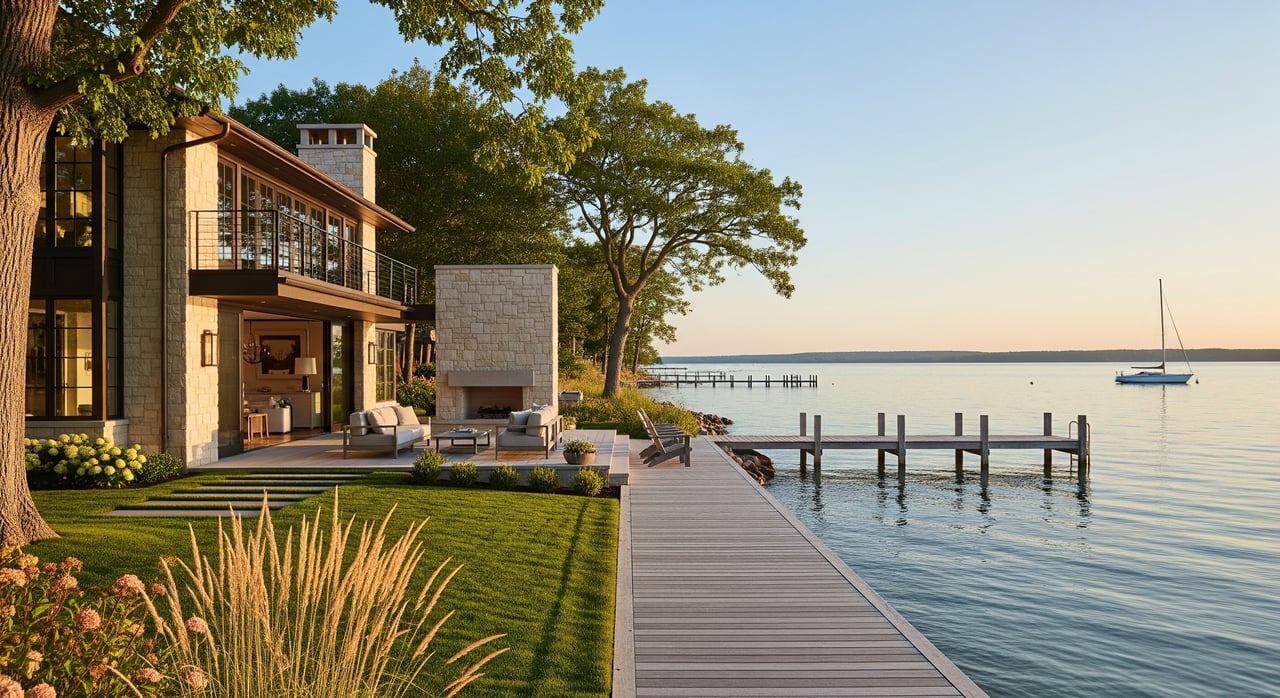
Wondering whether to bring cash or a loan to your Fontana-on-Geneva Lake purchase? You are not alone. Many Chicago-area weekenders face this choice as they scout the lake for a second home. In this guide, you will see how each path works in a resort market, what sellers really value, and how to build a winning offer either way. Let’s dive in.
Fontana market snapshot
Fontana sits within the Geneva Lake resort market, where waterfront and near-water homes carry premiums and often move quickly. Demand and listings tend to surge in spring and early summer. Competitive buyers commonly act fast during those months, while some closings happen in fall and winter. Proximity to Chicago, roughly 1.5 to 2 hours by car, makes weekend use practical and keeps buyer interest steady.
Sellers here often prefer certainty and speed. Offers with quick closes, fewer contingencies, or cash can hold an edge. If you are financing, you can still compete with thoughtful terms and strong preparation.
Paying all cash
Why cash stands out
- Strong negotiating position that reduces fall-through risk for sellers.
- Faster closes with fewer contingencies, since there is no lender underwriting.
- Lower transaction costs, since there are no mortgage fees and fewer lender-driven expenses.
- No exposure to interest rates or loan terms.
- Flexibility to waive an appraisal contingency if you are comfortable with the risk.
Drawbacks to weigh
- Large liquidity tie-up in an illiquid asset and increased concentration risk.
- Potential opportunity cost if other investments may outperform after taxes.
- You forego financing protections and may have fewer outs if an appraisal would have uncovered a pricing gap.
Who often buys with cash
Buyers who have recently sold another property, retirees, and investors who want certainty or a leg up in a tight lake market commonly use cash.
Financing a second home
Common loan paths
- Conventional second-home loans for personal use.
- Jumbo loans when the price exceeds conforming limits.
- Portfolio or bank-statement loans for nontraditional income.
- HELOC or cash-out refinance on your primary home to fund the down payment or full purchase.
FHA, VA, and USDA programs are generally for primary residences and are not typical for second homes.
What lenders expect
- Down payment: many second-home loans require 10 to 20 percent down, and jumbo loans often have stricter standards.
- Credit and reserves: stronger credit, lower debt-to-income, and several months of reserves are common, often around six months of principal, interest, taxes, and insurance.
- Rates and pricing: second-home rates can be slightly higher than primary. Investment property rates and down payments are usually higher.
- Appraisal and habitability: lenders require an appraisal and want the property to be suitable as a residence.
- Occupancy rules: you will certify personal use. Plans for short-term rental can shift the loan to investment classification with higher costs.
Pros of financing
- Preserves liquidity for investments, renovations, and emergencies.
- Leverage can improve returns if investment performance exceeds borrowing costs.
- Enables a purchase without tying up all your cash.
- Possible mortgage interest tax benefits within IRS limits. Consider consulting a tax professional.
Tradeoffs of financing
- Higher carrying costs due to mortgage interest.
- Underwriting and contingencies introduce closing risk and timing pressure.
- Larger documentation and reserve requirements, especially for jumbo loans.
- Short-term rental plans may change the loan type, down payment, and rate.
How financed buyers can win in Fontana
Strengthen your offer
- Secure a strong, written pre-approval from a lender experienced with second homes.
- Increase earnest money and consider a larger down payment.
- Shorten inspection and financing timelines if you are comfortable with the risk.
- Offer an appraisal-gap commitment or a guaranteed minimum price if the appraisal runs low, backed by cash or a bridge resource.
- Use a HELOC or bridge loan on your primary home to show funds and cover gaps.
- Work with a local agent who can craft flexible terms that sellers value, including possession timing or select concessions that preserve the seller’s net.
Lender prep checklist
- Start early with a lender who understands lake properties and can outline reserve and appraisal expectations.
- Get jumbo approval if you are near conforming limits.
- Organize bank statements, retirement accounts, and sale proceeds for quick verification.
- Expect appraisal variance on unique waterfront homes and plan for potential gaps.
Costs and rules to confirm locally
Recurring ownership costs
- Property taxes: lakefront assessments can be high. Review county parcel data and recent assessments.
- Insurance: replacement cost, wind and hail, and water-related risks can raise premiums. Flood insurance is rarely required on inland lakes, but review shoreline risk.
- Utilities and winterization: plan for heating, seasonal opening and closing, and care for periods of vacancy.
- Maintenance: dock care, seawall or shoreline work, landscaping, septic maintenance, and pest control.
- HOA or lake association: dues and special assessments may apply.
- Rental operations: if renting, budget for management fees, often 15 to 30 percent, plus cleaning, marketing, and repairs.
Short-term rentals and taxes
- Verify Village of Fontana and Walworth County requirements for registration, licensing, and room or occupancy taxes.
- If you rent, report income and track expenses under federal rules. Depreciation and deductions can be complex; consult a CPA.
Shoreline, docks, and septic
- Wisconsin shoreland zoning affects docks, seawalls, vegetation, and setbacks. Work may require permits.
- Many lake properties use septic systems that must meet state and county standards. Inspections or upgrades can be required at sale.
- Confirm insurance availability for seasonal or part-time occupancy and ensure adequate coverage for storms.
Decision framework
Ask yourself these questions before choosing cash or financing:
What is your primary goal? Weekend retreat, occasional rental, or long-term investment changes loan classification and tax impacts.
What is your timeline? If you aim for spring or early summer, speed matters. Cash or a bridge can help. If you have time, a strong pre-approval can work well.
What is your liquidity comfort? Decide how much cash you want to keep for investments, furnishings, or repairs.
How do you feel about leverage and rates? Cash removes rate risk. Financing preserves capital but adds carrying costs.
Will you rent short term? Disclose to your lender early since this can change down payment and rate. Confirm local rules and taxes.
What are your tax considerations? Mortgage interest caps and rental reporting rules vary by person. Speak with a tax professional.
Practical checklists
If you lean cash
- Line up proof of funds and keep a contingency reserve for repairs or furnishings.
- Consider an independent appraisal or broker opinion for pricing confidence.
- Verify title, shoreline permits, septic status, and any liens.
If you plan to finance
- Obtain a second-home pre-approval with clear reserves, down payment, appraisal expectations, and time-to-close.
- Explore a HELOC or bridge option to strengthen your offer or cover appraisal gaps.
- Prepare to shorten contingencies and consider limited appraisal-gap language if comfortable with risk.
For every buyer
- Engage a local agent who knows Fontana-specific rules on docks, setbacks, septic, and rental ordinances.
- Budget 2 to 4 percent of the price for near-term improvements, furnishings, or shoreline needs.
- Confirm HOA and short-term rental rules before assuming any rental income.
Example buyer scenarios
Cash-ready weekender
You want spring use and are targeting a near-water condo. Cash can help you close quickly during peak competition and waive an appraisal if needed. You keep a reserve for dock fees, furnishings, and seasonal maintenance.
Finance-first buyer with strong assets
You prefer liquidity and plan to use the property personally with no short-term rentals. A conventional second-home loan with 20 percent down and a robust pre-approval lets you offer competitive terms and a tight inspection timeline.
Occasional-renter planner
You will use the home most weekends but may rent a few weeks a year. You disclose this early to your lender to avoid surprises, confirm local rental ordinances, and prepare for potential changes to loan classification.
Action plan
- Months 0 to 1: Define goals, budget, and rental plans. Get a second-home pre-approval or collect proof of funds. Review Fontana rules on docks, rentals, and septic.
- Months 1 to 2: Tour homes as spring listings hit. Use strong terms that match your financing or cash position.
- Contract to close: Order inspections, confirm shoreline and septic status, and finalize insurance. If financing, monitor appraisal timing and prepare for potential gaps.
- After closing: Set up utilities and winterization plans, enroll in HOA or lake association, and establish a maintenance schedule.
Ready to move forward on a Fontana second home with clarity and confidence? Bring your goals, and we will tailor a cash or financing strategy that fits the lake’s pace and your plans. Reach out to Shannon Blay to start a focused search and offer plan.
FAQs
How competitive are cash offers in Fontana-on-Geneva Lake?
- Cash often carries an edge because it shortens timelines and reduces fall-through risk, which many resort-market sellers prefer.
What down payment do lenders usually require for a second home?
- Many second-home loans call for 10 to 20 percent down, with stricter credit and reserve expectations than primary homes.
Will short-term rental plans affect my loan options?
- Yes. If the lender classifies the home as an investment, you may face higher down payments, different rates, and added requirements.
Do I need special insurance for a lake home in Walworth County?
- You should confirm coverage for wind and hail and seasonal occupancy, and review any shoreline-related risks with your insurer.
What local rules should I check before buying near Geneva Lake?
- Verify shoreland zoning, dock and setback standards, septic requirements, HOA or association rules, and short-term rental registration and taxes.
When is the best time to buy a Fontana second home?
- Listings and demand concentrate in spring and early summer, but well-prepared buyers can find opportunities and negotiate timing in the shoulder seasons.