Is your lake home ready for that first deep freeze? In Walworth County, winter can arrive fast, and the Geneva Lakes area often sees long stretches below freezing from November through March. If you own a year-round residence or a seasonal getaway, a few smart steps now can prevent burst pipes, dock damage, and costly emergency calls later. In this guide, you will get a clear, local checklist, smart monitoring tips, and timing advice tailored to Walworth County.
Let’s dive in.
Why winterizing matters here
Walworth County’s winter pattern brings repeated freeze and thaw cycles, plus heavy snow and ice. Lakes typically freeze in mid or late winter depending on the season. That puts unique stress on plumbing, roofs, and shoreline features at homes around Geneva Lake, Lake Como, Delavan Lake, and nearby communities.
Common risks include frozen pipes in uninsulated areas, ice dams that force water under shingles, and ice movement that strains docks, pilings, and boat lifts. Septic systems can also be affected by frozen drainfields. Access can be an issue too if you have a steep driveway or a long private road that needs routine plowing.
Pre-season planning (Sept–Oct)
Get ahead of the rush while contractors still have availability. Early preparation helps you avoid last-minute emergencies and higher peak-season costs.
- Inventory and documentation
- Photograph interiors, exteriors, mechanical rooms, meters, docks, and lifts for insurance and spring comparison.
- Collect access details, including keys, gate codes, and a contact list of vendors and neighbors who can help during a cold snap.
- Book essential services now
- Schedule HVAC inspection and furnace service. If you use a fireplace or wood stove, book a chimney cleaning and safety check.
- If septic service is due, schedule an inspection or pump. This is recommended before a long vacancy when appropriate.
- Reserve marina or dock company time for boat, lift, and dock work. Fall slots fill quickly.
- Exterior and site prep
- Clean gutters and downspouts so meltwater drains away from the foundation.
- Trim dead branches and address hazard trees that could fail under snow or ice.
- Secure or store outdoor furniture and grills. Keep combustible materials safely stored.
- Pools and irrigation
- Hire a licensed service to blow out irrigation lines. Winterize pool equipment and covers per manufacturer guidance.
Pre-freeze checklist (late Oct–Nov)
Complete these items before sustained nights below freezing. If your home will be vacant, talk to licensed pros about full winterization.
Plumbing protection
- Shut off and drain exterior spigots
- Locate and label interior shutoff valves for hose bibs. Close them and open exterior faucets to drain.
- Decide on heat-on or full drain-down
- If vacant, consider full system draining or professional use of non-toxic antifreeze where appropriate. This reduces freeze risk but requires professional recommissioning in spring.
- If you keep heat on, maintain a minimum setpoint that meets your insurer’s requirements, often 55 to 60 degrees. Use a smart thermostat for remote checks.
- Insulate high-risk areas
- Add pipe insulation in crawl spaces, attics, and exterior wall runs. Install heat tape where recommended by a licensed electrician.
- Add leak and freeze sensors
- Place sensors under sinks, near the water heater, and in the basement or utility room. These can alert you to a problem before it becomes a disaster.
Water heater and boiler
- Service equipment and inspect safety valves. Insulate tanks if applicable.
- If you plan a full winter shut-down, follow manufacturer guidance or hire a pro to drain and prepare the system.
Wells and septic
- Protect the wellhead and pressure tank. Drain or heat tape above-ground well piping as needed.
- If due, pump the septic tank before a long vacancy. Avoid driving heavy vehicles over the drainfield when soil is frozen or saturated.
Roof, gutters, and exterior
- Inspect the roof for loose shingles, flashing gaps, and potential leak points. Repair before snow arrives.
- Consider insulation and ventilation improvements that reduce ice dam formation. Snow guards may be appropriate for some roofs.
- Confirm you have safe, clear drainage paths away from the house.
Docks, lifts, and boats
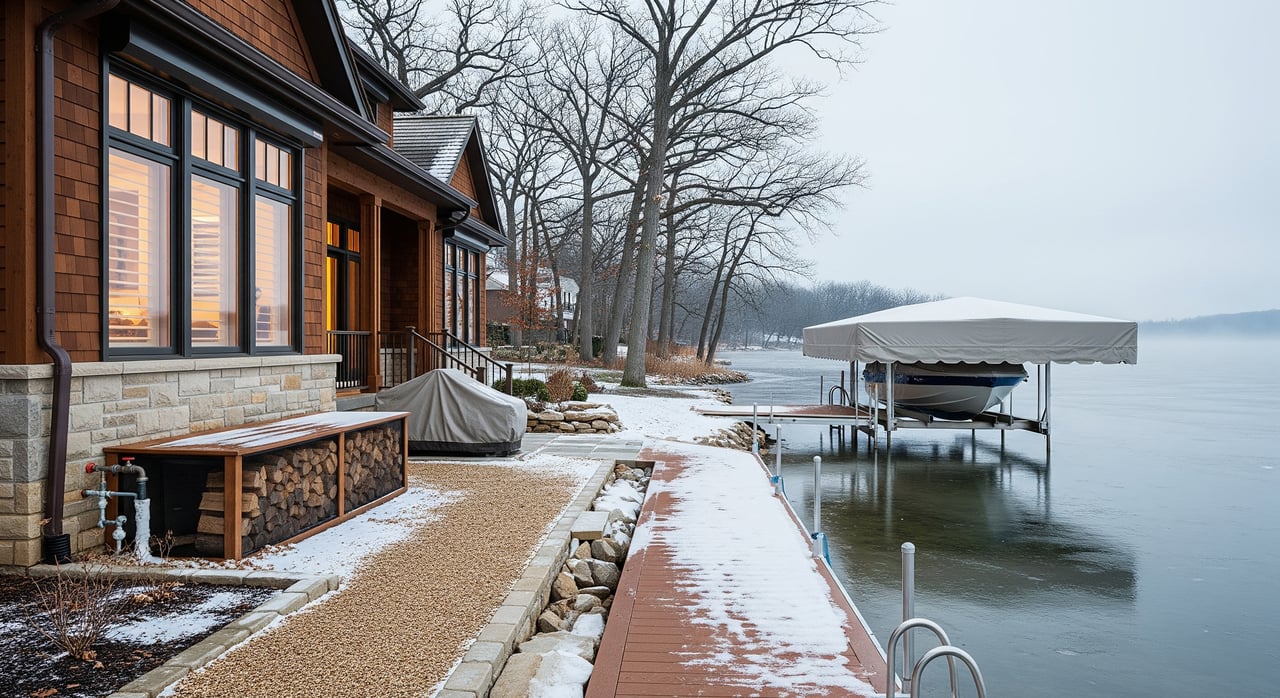
- Follow marina and manufacturer guidance for removing or securing boats and lifts. Ice can cause significant damage if equipment is not prepared properly.
- Schedule engine winterization for outboards and inboards, including fuel stabilizer, fogging, and cooling system service.
- Remove or secure dock sections per your dock company’s advice. Ice conditions vary by lake and season, so do not assume one method is right for all properties.
Outdoor water features
- Drain and winterize fountains and exterior lines. Follow manufacturer steps for hot tubs, including water chemistry, draining if required, and cover security.
In-season routines (Nov–Mar)
Consistency is your best protection once temperatures dip. Create a simple routine and a clear plan for snow and storm events.
Remote checks and inspections
- Arrange weekly or biweekly check-ins when the property is vacant. Increase frequency during extended cold snaps.
- After major storms, verify that heat is running, water is off if applicable, and there are no leaks or roof concerns.
Snow and ice management
- Hire a local snow contractor for driveways, steps, and walkways. Confirm insurance and plowing thresholds in writing.
- Pre-arrange emergency roof snow removal if your roof pitch and loading warrant it. Work with qualified pros for safety.
Wildlife and pests
- Seal openings where rodents can enter. Inspect storage areas and garages, and store food securely.
Smart monitoring and coordination
Today’s devices make off-site peace of mind more practical, especially for rural or lakeshore addresses.
- Smart thermostats
- Use Wi-Fi thermostats for remote setpoint control and low-temperature alerts.
- Leak and freeze sensors
- Place battery-backed sensors in basements, under sinks, and near mechanicals. Many send smartphone alerts.
- Smart water shutoff
- An inline automatic shutoff installed by a plumber can limit major water damage if a pipe bursts.
- Security and connectivity
- Consider cameras or door sensors for awareness after storms or service visits. Ensure reliable internet or a cellular fallback so alerts reach you.
Vendor coordination matters too:
- Line up key pros before winter
- HVAC contractor, licensed plumber, electrician, septic service, snow removal, marina or dock company.
- Set clear access permissions
- Provide written authorization for emergency entry where needed. Keep contractor contact info and instructions in one place.
- Document everything
- Keep contracts, keys, manuals, shutoff locations, and thermostat guidelines in a folder and a cloud backup.
- Know your insurance requirements
- Some policies require regular documented checks or specific steps like maintaining heat or full winterization. Get these in writing.
Local rules, insurance, and timing
Shoreline and in-water work in Wisconsin often falls under state and municipal rules. Timing and methods can be regulated, and lake associations may publish seasonal guidance.
Permits and lake rules
- Wisconsin agencies may require permits or have seasonal restrictions for pier, lift, and shoreline work.
- Municipal codes in places like Lake Geneva and Delavan can add local requirements for dock location, removal, and construction.
- For tree work or shoreline stabilization, check county and state rules before starting.
Insurance and liability
- Insurers often include vacancy provisions that specify steps to keep coverage in force. Examples include maintaining heat, routine inspections, winterizing plumbing, and managing snow.
- Keep docks and driveways secured and accessible for visitors and contractors. Safe access lowers liability risk.
- Boat insurance may outline winter storage and prep steps. Confirm with your marina and insurer.
Timing at a glance
- September to October
- Plan services and book contractors for HVAC, chimney, septic, and marina work.
- October to November
- Complete plumbing shutoffs, insulation, and any full winterization before sustained freezes.
- November to March
- Maintain inspections, manage snow and ice, and follow your emergency plan.
If you plan to sell this winter
You can keep your listing show-ready without risking a pipe freeze. Maintain a minimum heat setpoint that meets your policy requirements, typically around 55 to 60 degrees. Use a smart thermostat for remote adjustments and alerts. Keep utilities on for showings and inspections, and coordinate snow removal for safe access.
If you are weighing pre-market improvements, a concierge-style approach can help you prioritize. Simple items like gutter cleaning, insulation touch-ups, or trim work can protect the home and improve buyer confidence. Precise pricing that reflects seasonal dynamics around Geneva Lake and the broader Walworth County market will keep you aligned with motivated buyers.
How we can support your winter plan
You deserve a smooth, safe winter with fewer surprises. Our team brings lifelong local insight and a hands-on, concierge sensibility to help you protect value and prepare for a spring-ready sale when the ice melts. We can share trusted local vendor introductions for HVAC, plumbing winterization, septic service, snow removal, and marina scheduling. During an active listing, we coordinate access, showing schedules, and practical check-ins so buyers can experience the property comfortably and safely.
Ready to safeguard your lake home and plan your next move? Unknown Company can help you prioritize, connect with the right local pros, and position your property for success. Get a Free Home Valuation to understand today’s value and the steps that can lift your sale price.
FAQs
When should I start winterizing a Walworth County lake home?
- Begin planning in late summer and complete key tasks by October or early November, before sustained sub-freezing nights.
Should I shut off water and drain my house if it will be vacant?
- Full drain-down reduces freeze risk but requires a professional for winterization and spring recommissioning. If you keep heat on, maintain a safe minimum setpoint and add leak and temperature sensors.
How do I protect docks and boat lifts from ice on Geneva Lake or Delavan Lake?
- Follow manufacturer and marina guidance. Options include removing equipment, securing for vertical movement, or using specific hardware suited to local ice conditions. Schedule early to secure fall service windows.
What should I do with my septic system before winter?
- If service is due, pump before a long vacancy. Insulate exposed piping and avoid driving heavy vehicles over the drainfield when soil is frozen or saturated.
How often should a vacant lake home be checked in winter?
- Weekly to biweekly is common, with more frequent checks during extended cold snaps. Use a reliable local contact or property manager with clear instructions.
What temperature should I set on my thermostat in winter?
- Many owners use 55 to 60 degrees for vacant but heated homes. Confirm the minimum required by your insurance policy and use a smart thermostat for alerts.
Does my insurance require winter checks or documentation?
- Many carriers require documented inspections and specific steps like maintaining heat or winterizing plumbing. Ask for written requirements and keep records.
Can I leave my refrigerator or water heater on over winter?
- If fully winterizing and draining, empty and unplug refrigerators. If you keep the home heated, maintain appliances per manufacturer guidance and consult a pro for water heater or boiler settings.